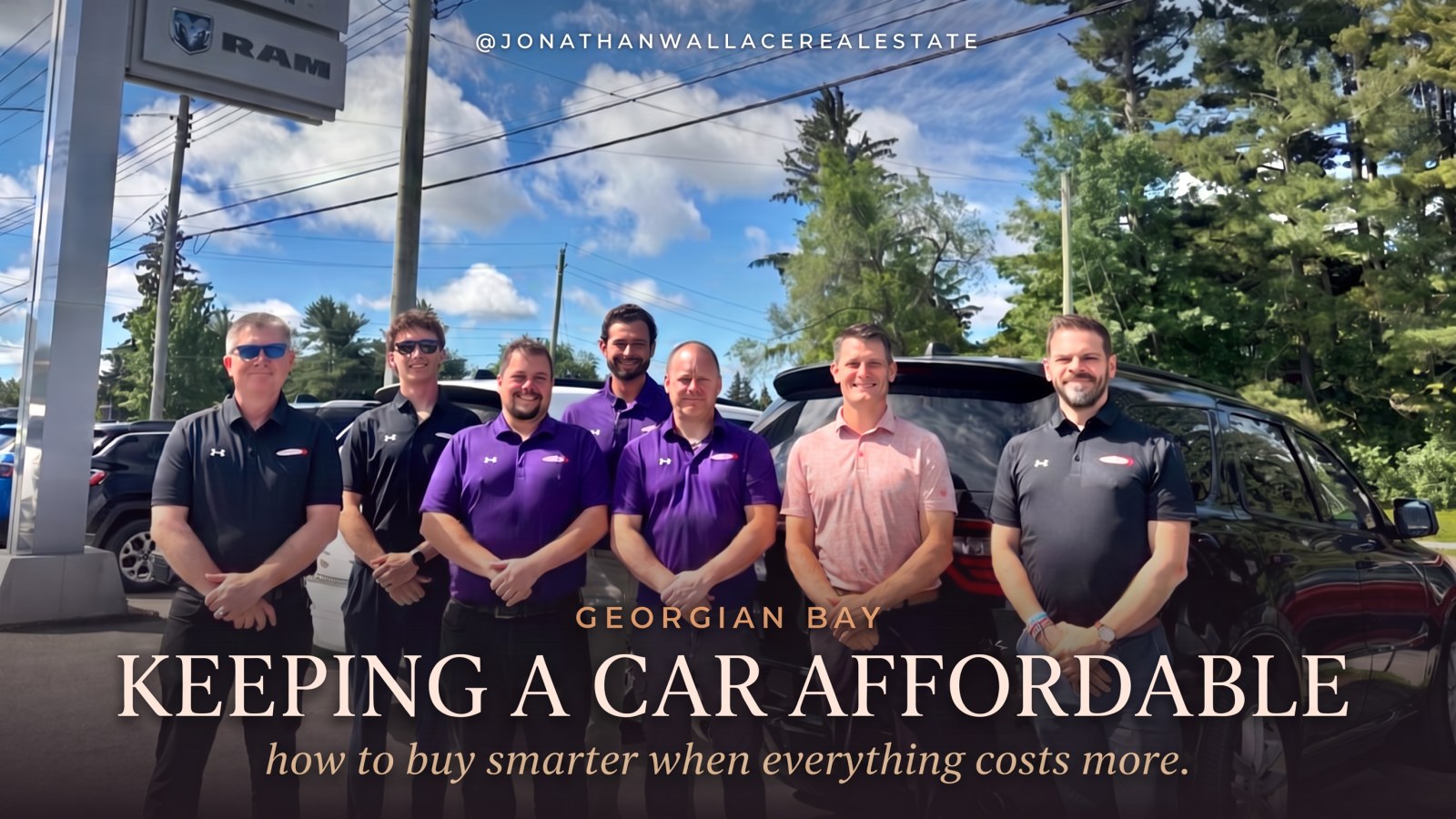
Start by deciding what "affordable" really means for your household, and then choose the vehicle and the loan to fit it. That's how David Clayton, special finance coordinator and product specialist at Midland Chrysler, starts every conversation. After that, it comes down to a loan that ends before you plan to trade, a trim level you'll actually use, winter tires that are less than four years old, and a test drive that looks like your normal week.
- "Affordable" means something different in every home. For some people it's the monthly payment, for others it's fuel, and for some it's a truck that can tow without breaking down.
- Going down one trim level can save $10,000 to $15,000, and you still keep the safety features that now come standard.
- New versus used is a math question, and sometimes new ends up with the lower payment.
- Your loan should match how long you'll keep the vehicle. If you trade every five years, a seven-year loan is a sensible middle ground.
- Good winter tires matter more than all-wheel drive, and they should be replaced at about four years even if you barely drove on them.
- You don't pay tax on the value of your trade-in, so a $10,000 trade saves you about $1,300.
If your mortgage payment has felt heavier lately, there's a good chance your car payment has too. Vehicles cost more than they used to, borrowing costs more, and gas and maintenance haven't gotten any cheaper.
Most of the questions I hear about it are practical ones. Do we really need two vehicles? Is new more expensive than used right now? How long should the loan be? What does a car need to get through a winter in Tiny or Tay?
So I had a chance to sit down with David Clayton and put those questions to him. David has worked in sales and management at Midland Chrysler, and today he's their special finance coordinator and product specialist. Much of his day is spent helping people with limited credit, or credit they're rebuilding, work out what they can realistically afford.
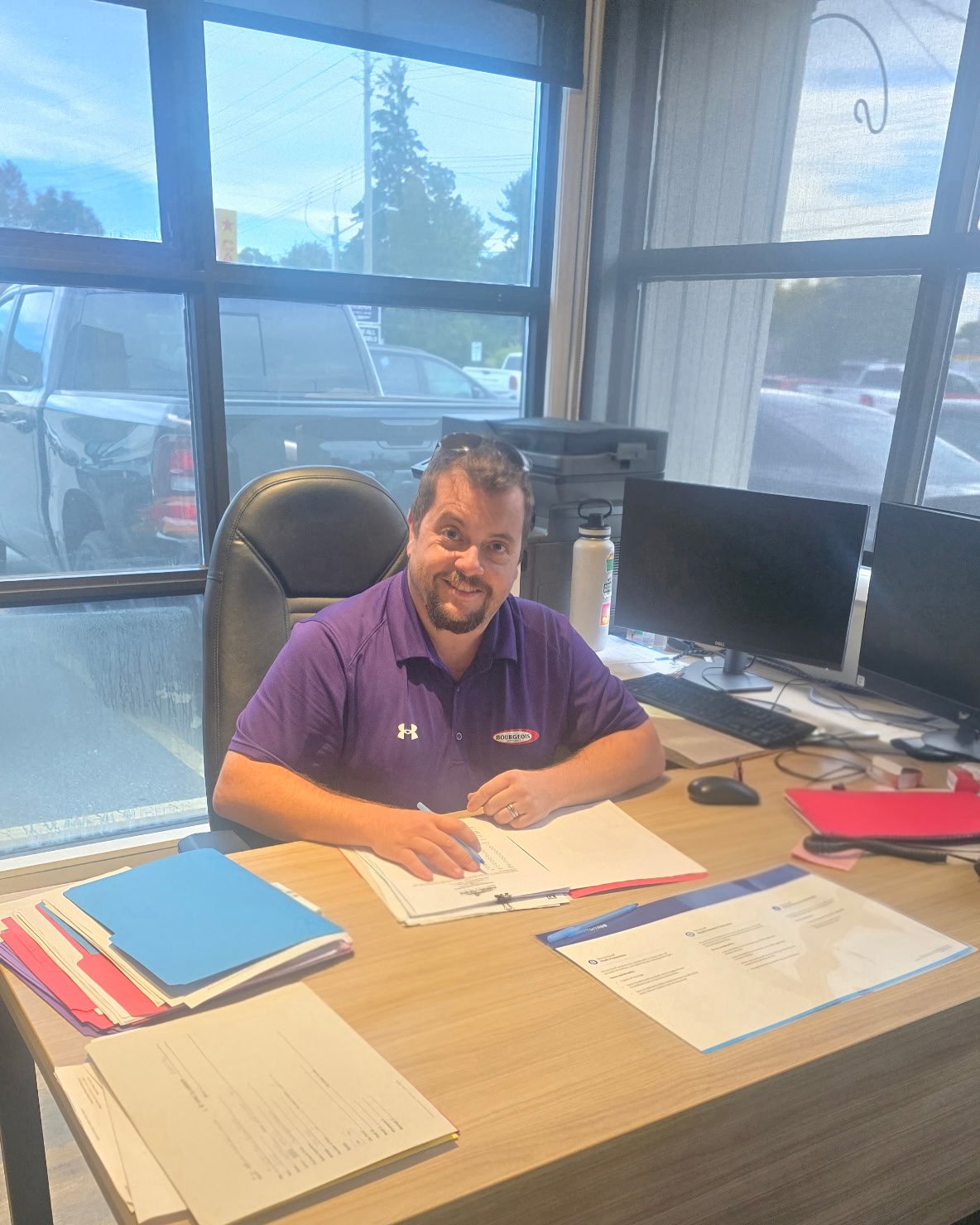
David's approach is simple: tell people the truth
I started by asking how he sees his job, and his answer set the tone for everything that followed.
"I treat people the way that I would want to be treated, the way that I would expect my family members to get treated when they go somewhere."
He doesn't sugarcoat things either. "If we can make something work, we can make something work. If the math just doesn't work out, then that's just what it is."
That's how the whole conversation went. There was no sales pitch, just honest answers from someone who sees these decisions every day.

Rising costs have changed what people ask at the dealership
David's view of the market is that almost everything costs more right now. Vehicle prices have gone up, interest rates have been tough, and fuel and maintenance still add up. Put together, owning a vehicle simply costs more than it did a few years ago, and people are feeling it.
What surprised me was how far that change has reached. David works for a brand that has never been known for worrying about fuel economy, and yet even there, the questions have shifted. "How can I spend less money on fuel? How can I spend less money on oil changes and maintenance?"
Most people aren't trying to save a fortune. They just don't want their vehicle costing them any more than it already does.
How people are keeping their car costs down
David sees the same handful of choices again and again. Some people add a maintenance plan to their loan so the big repair bills are planned for instead of landing as a surprise. Some families are going from two vehicles down to one. Others are trading in a truck for a smaller SUV, or taking a serious look at a hybrid if it suits the way they drive.
The most common choice, though, is going down one trim level. Not long ago, you had to pay extra for things like a backup camera. Backup cameras have been standard since 2018, and blind-spot monitors and Bluetooth now come in most vehicles, so the safety basics are there even on a lower trim.
That has made it easier for people to let go of the extras. As David put it, they're saying, "I don't need the leather seats. I don't need the vented seats." That one decision can save $10,000 to $15,000, which, in his words, is "a big chunk."
"Affordable" means something different to everyone
When someone tells David they need something affordable, the first thing he does is ask what they mean by it.
"Is it total cost of ownership? Is it payments? Is it fuel?"
For one family, it's the monthly payment. For another, it's how much they spend on gas. For someone who tows a trailer six times a month, it's a truck that won't break down.
I see the same thing with houses. Two families can walk through the same home, and one will be stretching to afford it while the other is perfectly comfortable. Before you can make a good decision, you have to know which of those families you are.
Whether new or used is better comes down to the math
Because David works on the finance side, he works backwards. The bank sets your interest rate based on your income and credit history, and then he looks for a vehicle that fits inside it.
That's where new vehicles can surprise people. Manufacturers often offer lower interest rates on new models, and that can bring the payment on a new vehicle close to a used one, or even below it.
Used still makes more sense in plenty of situations. If you don't owe much on the vehicle you're driving now, used is often the better move. The interest rate on a used vehicle is usually a bit higher, but if your goal is to carry less debt overall, used can still come out ahead.
There isn't one right answer. It depends on what you owe, what you're driving, and what you actually need, which is why David runs the numbers for each family rather than pushing one option.
A longer loan lowers your payment but can cost you later
Car loans have gotten much longer. David's brand offers terms of up to 96 months on new vehicles, which is eight years. A longer loan gives you a lower payment, but the problem shows up when you decide to trade.
Most people don't keep a vehicle for eight years. So when they go to trade it in, they often still owe money on it, and that amount has to be dealt with before they can move into something new.
Driving a lot makes this worse. The average is about 20,000 kilometres a year, and if you drive more than that, David suggests taking a year off the length of your loan.
His rule of thumb is easy to remember: "If you're somebody who trades your vehicle in every five years, then maybe stick with a seven-year term." You may still owe a little at the five-year mark, but the vehicle should be worth enough that it isn't a problem.
Putting more money down would help too, but as David said, "let's be honest, most people don't."
Getting through a Georgian Bay winter
I asked David what matters most for winter driving around here, and he didn't hesitate. "I am a very firm believer that a set of winter tires will do better than a four-wheel drive or an all-wheel drive vehicle."
How you drive still makes a difference, and someone with a heavy foot may get more control from four-wheel drive. But either way, he said, "you still need those winter tires."
What most people don't realize is that tires age even when they're not being driven. The rubber slowly hardens over time, so a set of winter tires that's more than about four years old should be replaced, even if it's hardly been driven. "Rubber still degrades. It still gets harder after a certain length of time."
Heated seats and remote start are nice to have, but you don't need them. David would much rather see that money go toward good tires.
He also cleared up the old habit of warming up the car for a long time in the driveway. Modern vehicles are ready to drive in about 30 seconds, and as he put it, "We don't get winters that are cold enough in our area to make that a necessity."
Test drive a used vehicle as if you already own it
Comparing new vehicles is fairly easy, because the same model is basically the same at every dealership. Used vehicles are different. David compared them to houses, where every one has its own history and its own quirks.
His first rule is one he tells everyone: "You got to put your butt in the seat." A vehicle can look perfect online and still leave your back sore after 20 minutes of driving, and you won't know that until you sit in it.
From there, he suggests testing it against your real life:
- Drive it on the route you normally take home.
- Park it where it will actually live, and if that's the garage, make sure it fits.
- Turn the radio off so you can listen for clicks, ticks and hums.
- Drive a couple of similar used vehicles and one new one, so you know what normal sounds like.
- Bring along what you carry every week, whether that's hockey bags, dance bags or a Costco run. "Some of these dance bags are huge."
The garage one comes up more than you'd think. David has had people come back after buying because the vehicle didn't fit, and by then there's nothing he can do.
Getting a fair deal without playing games
Everyone likes the story about how they beat the dealer. David's advice is less exciting, but it works better.
"Do some research. You got to make sure that you understand what your vehicle is worth. Be upfront, be honest."
It's easy to look up what your vehicle is worth online, but it helps to be realistic about it. Chips, scrapes, worn brakes, old tires and missed services all bring the value down, even on a vehicle you've taken good care of.
What the dealership spends on your trade
I was curious what a dealership actually spends to get a trade-in ready to sell again. For a vehicle less than two years old, David said it's usually $2,500 to $3,000, and that's for mechanical work alone. By the time a vehicle is around five years old, it's closer to $4,000 to $5,000.
On top of that, the dealership still has to advertise the vehicle, pay a salesperson and keep the lights on. "It's absolutely no secret that dealerships are in business to make money." That's why a trade-in offer is usually lower than what you might get selling it yourself.
Why trading in can save you on tax
This is the part people tend to forget when they compare the two. In Ontario, the value of your trade-in comes off the price of your next vehicle before tax is added, which means you don't pay HST on that amount.
David used simple numbers to explain it. If your trade is worth $10,000, "you would save an additional thirteen hundred dollars."
Selling privately comes with its own costs as well. You're dealing with messages from strangers and people showing up in your driveway to test drive your truck. And in a town this size, if you sell a neighbour a vehicle that breaks down a month later, you'll probably hear about it.
Whichever way you go, be honest about any problems you know of. Nobody expects you to be a mechanic, only to share what you know.
The one thing David wants you to remember
My last question was the simplest one: if people remember one thing from this, what should it be?
"Just do your research. Be prepared when you're going into a dealership. That's how you're going to make sure that you're not being taken advantage of."
He added one more piece of advice that I think applies to buying a house just as much as a car: "Understand what you're going in to look at, and stick to what you want to look at. Don't let anybody persuade you unless there's reason for it."
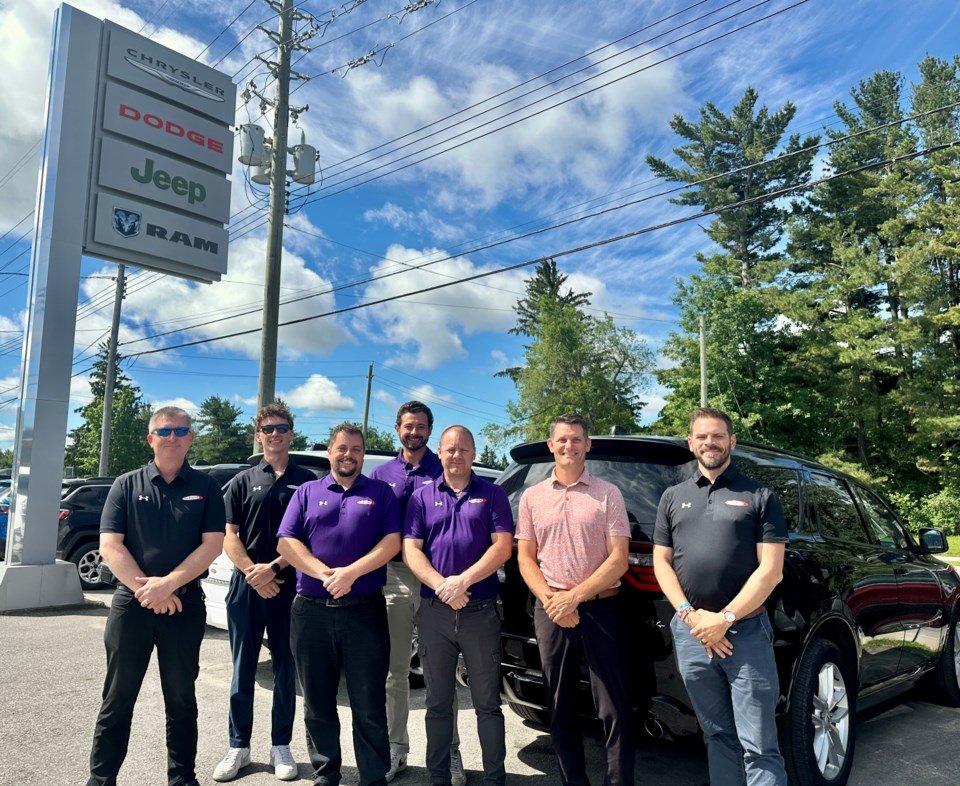
If you or anyone you know is looking to trade in or upgrade, whether it's new or used, or you're working with bad credit, David is a local expert who provides an exceptional level of service.
David has put my butt in the last two trucks I've owned, and he's helped my friends and family too. When you go see him, tell him Jonathan sent you, and he'll roll out the red carpet. His contact info is below.

Local expert
David Clayton, Special Finance Coordinator/Product Specialist, Midland Chrysler
Cell: 705-790-9247
Midland Chrysler: 705-526-3777
Email: Davidc@midlandchrysler.ca
FAQ
Is it better to trade in a car or sell it privately in Ontario?
It depends on how far apart the two offers are. David Clayton of Midland Chrysler points out that you don't pay HST on your trade-in amount, so a $10,000 trade saves about $1,300. For families in Midland or Penetanguishene, weigh that against the time and hassle of selling it yourself.
How long should a car loan be?
Match the loan to how long you'll keep the vehicle. David suggests a seven-year loan if you trade every five years, because an eight-year loan often leaves you owing money when you trade. If you drive a lot, like a long commute from Tiny or Tay, go shorter.
Are winter tires more important than all-wheel drive around Georgian Bay?
For most drivers, yes. David says good winter tires do more than all-wheel or four-wheel drive alone, and they should be replaced at about four years no matter how little you drove. That goes for every winter drive through Midland, Tiny and Tay.
What should you check on a used car test drive?
Test it against your real life. Sit in it long enough to know the seat works for you, turn the radio off, listen for strange noises, and compare it to a new one. Around Midland and Penetanguishene, also make sure it fits your garage and your hockey bags.
All answers are current as of September 2026.
Keep reading
- Fixed rates jumped and confidence cracked. Here's what that actually means on Georgian Bay.
- Is now the right time to buy or sell in Midland, Ontario?
- Moving to Georgian Bay from the city: what actually changes
Weighing a move this fall?
If you want to know what the house payment would actually look like at today's prices, I'll put the numbers together for you.
Book a conversation